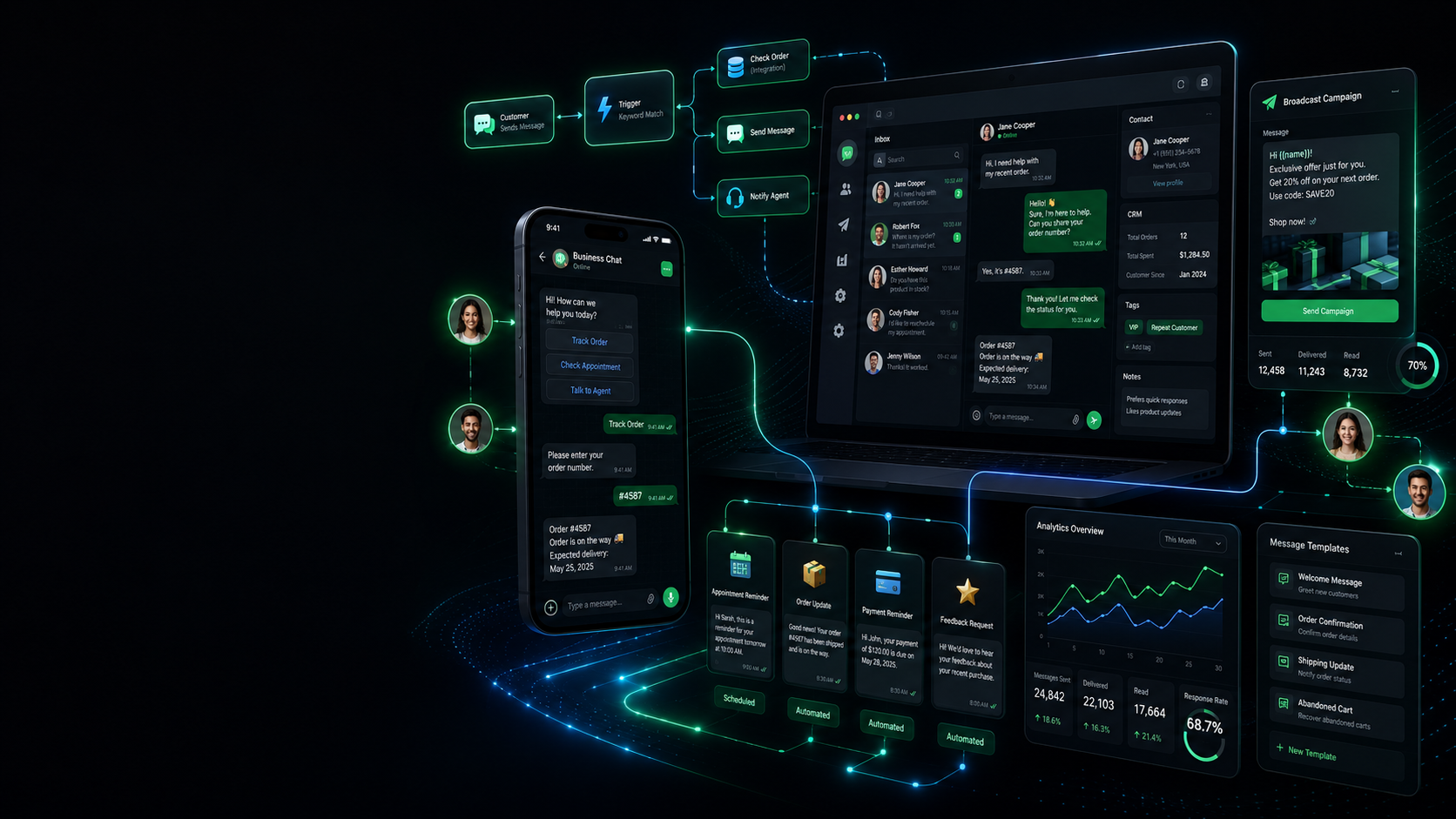
WhatsApp automation is the process of using software, chatbots, APIs, and workflows to automatically send,
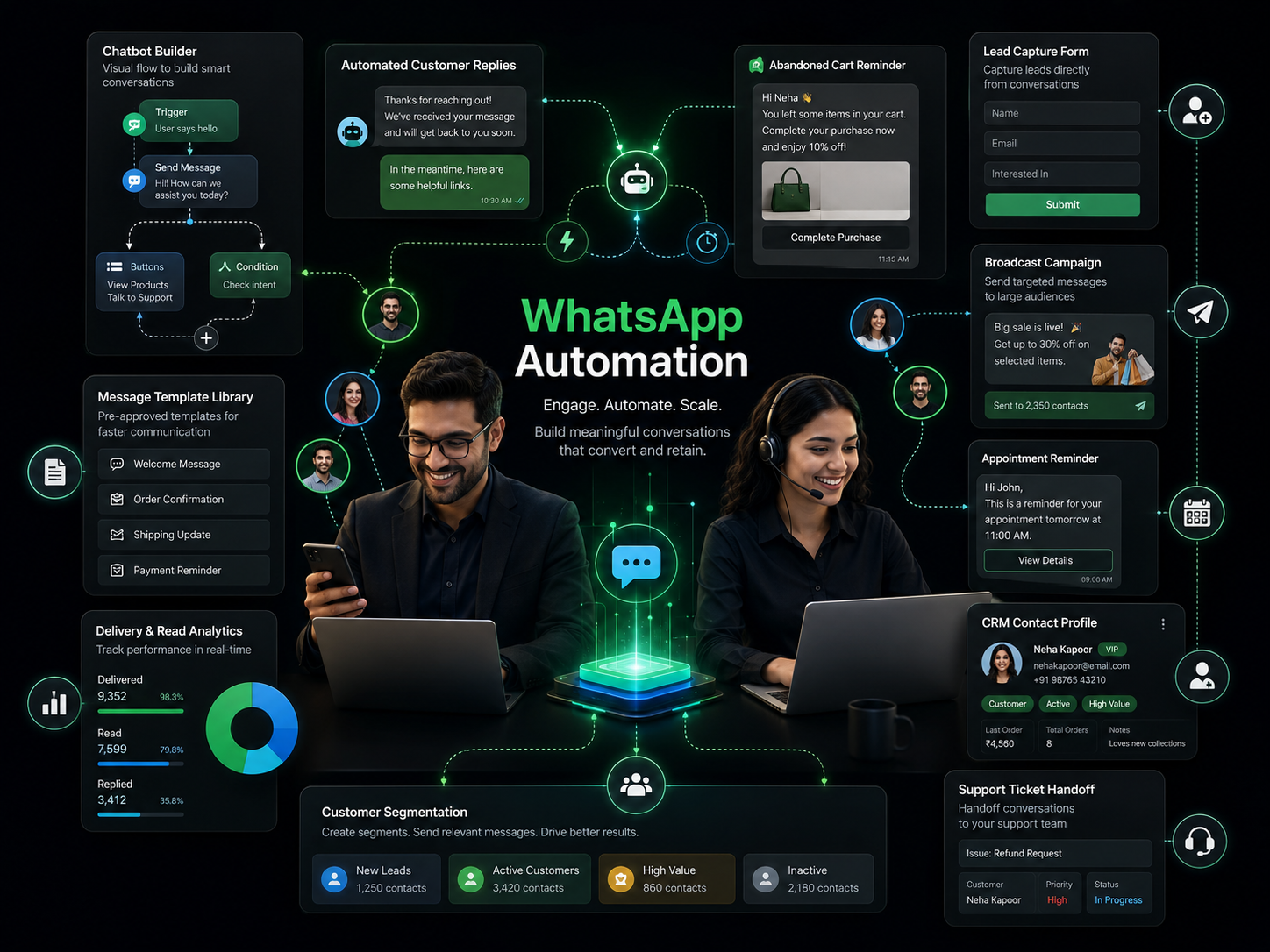
WhatsApp automation is the process of using software, chatbots, APIs, and workflows to automatically send, receive, and manage messages on WhatsApp. It helps businesses communicate with customers faster without manually replying to every message.
With WhatsApp automation, businesses can send order updates, appointment reminders, welcome messages, payment confirmations, support replies, promotional campaigns, and lead follow-ups. It can also connect with CRM systems, e-commerce stores, booking platforms, and customer support tools.
The main goal of WhatsApp automation is to save time, improve customer response speed, and create a smoother communication experience.
WhatsApp automation can be divided into different types based on business needs and communication goals.
Instant Replies: Businesses can answer common customer questions automatically, such as pricing, services, delivery time, store location, or refund policy.
Lead Collection: WhatsApp automation can collect customer names, phone numbers, service interests, and requirements through automated chat flows.
Order Updates: Online stores can send order confirmation, shipping updates, delivery alerts, abandoned cart reminders, and payment notifications.
Booking Reminders: Clinics, salons, consultants, agencies, and service businesses can send appointment confirmations, reminders, and rescheduling messages.
Automatic Follow-Ups: Businesses can send follow-up messages to interested leads who asked about a product or service but did not purchase yet.
Broadcast Messages: Businesses can send offers, product launches, discount codes, event updates, and seasonal promotions to selected customer groups.
AI-Based Conversation: WhatsApp chatbots can answer questions, guide users, recommend products, qualify leads, and transfer complex queries to human agents.
Customer Management: WhatsApp can be connected with CRM tools to track conversations, update lead status, assign agents, and manage sales pipelines.
Team Notifications: Businesses can send automatic alerts to internal teams for new leads, orders, complaints, appointments, or urgent support requests.
Customer Feedback: Businesses can automatically ask customers for reviews, ratings, testimonials, or feedback after a purchase or service.
WhatsApp automation offers many benefits for businesses, sales teams, support teams, and customers.
Instant Replies: Customers receive quick answers without waiting for a human agent.
Better Experience: Fast replies make the business look more active, professional, and reliable.
Less Manual Work: Teams do not need to answer the same questions again and again.
Automated Workflows: Common tasks like confirmations, reminders, and follow-ups can run automatically.
Lead Qualification: Automation can ask the right questions and filter serious leads from casual inquiries.
Sales Pipeline Support: Leads can be moved automatically into CRM stages based on their responses.
Timely Follow-Ups: Automated follow-ups help recover lost leads and bring customers back.
Personalized Offers: Businesses can send targeted messages based on customer behavior and interest.
Always Online: WhatsApp automation can respond to customers even after office hours.
Global Support: Businesses can support users from different time zones without extra staff.
Common Query Handling: Chatbots can solve basic issues quickly.
Human Handoff: Complex problems can be transferred to a real support agent when needed.
Personal Communication: WhatsApp feels more direct and personal than email or website forms.
High Open Rate: Customers are more likely to see and respond to WhatsApp messages.
Lower Support Load: Automation reduces the need for a large support team.
Efficient Operations: Teams can focus on important conversations instead of repetitive tasks.
Connected Systems: WhatsApp automation can connect with websites, CRMs, e-commerce stores, booking tools, payment systems, and help desks.
Centralized Data: Customer conversations and actions can be stored in one place.
Performance Reports: Businesses can track message delivery, response rates, campaign results, lead quality, and customer activity.
Smarter Decisions: Analytics help improve sales, support, and marketing strategies.
WhatsApp automation can be used in many industries and business models.
Order Notifications: Stores can send order confirmations, shipping updates, delivery alerts, and return status.
Abandoned Cart Recovery: Customers can receive reminders when they leave products in the cart.
Appointment Reminders: Clinics can send booking confirmations, reminders, lab report alerts, and follow-up instructions.
Patient Support: Patients can ask basic questions and get automated guidance.
Property Inquiries: Agents can automatically share property details, prices, images, and location.
Lead Follow-Up: Interested buyers can receive follow-up messages and visit reminders.
Student Communication: Schools and universities can send admission updates, fee reminders, exam schedules, and class alerts.
Course Inquiries: Training centers can answer course-related questions automatically.
Booking Updates: Hotels and travel agencies can send reservation confirmations, itinerary details, and travel reminders.
Guest Support: Customers can ask about availability, pricing, check-in time, or packages.
Order Updates: Restaurants can send order confirmation, delivery status, menu links, and offers.
Reservation Automation: Customers can book tables and receive reminders through WhatsApp.
Quote Requests: Agencies, cleaning companies, repair services, and consultants can collect customer requirements automatically.
Follow-Up System: Businesses can send reminders, estimates, and service updates.
Account Alerts: Fintech companies can send transaction notifications, payment reminders, and document updates.
Customer Assistance: Basic support questions can be answered through automated chat.
Registration Confirmation: Event organizers can send tickets, reminders, venue details, and schedule updates.
Audience Engagement: Attendees can receive updates and ask questions through WhatsApp.
Campaign Messages: Teams can send personalized offers, product updates, discount codes, and lead nurturing messages.
Sales Automation: Leads can be followed up automatically based on interest and behavior.
The history of WhatsApp automation shows how business messaging moved from simple manual replies to smart automated workflows.
Basic Communication: WhatsApp started as a personal messaging app where users could send text messages, images, videos, and voice notes.
Manual Replies: Businesses initially used WhatsApp manually to talk with customers one by one.
Small Business Tools: WhatsApp introduced the Business App for small businesses.
Business Profiles: Companies could add business name, address, website, working hours, product catalog, and quick replies.
Simple Automation: Businesses started using saved replies to answer common questions faster.
Customer Organization: Labels helped businesses organize chats by status such as new lead, pending payment, completed order, or follow-up.
Larger Business Use: WhatsApp Business API allowed medium and large businesses to connect WhatsApp with their systems.
System Integration: Companies could send automated notifications, support messages, and transactional updates.
Automated Conversations: Businesses started using chatbots to answer questions, collect leads, book appointments, and guide customers.
Human Handoff: Chatbots could transfer conversations to real agents when needed.
Lead Tracking: WhatsApp conversations became connected with CRM platforms.
Sales Workflows: Businesses could automatically assign leads, update statuses, and send follow-up messages.
Order-Based Messaging: Online stores started using WhatsApp for order confirmations, shipping updates, payment links, and abandoned cart recovery.
Customer Convenience: Buyers could ask questions and receive updates without leaving WhatsApp.
Smart Replies: AI made WhatsApp automation more natural by understanding customer intent and replying in a human-like way.
Personalized Support: AI can recommend products, answer complex questions, and guide customers based on their needs.
Connected Messaging: WhatsApp became part of larger customer support systems alongside website chat, email, SMS, Instagram, and Facebook Messenger.
Central Dashboard: Teams can manage all conversations from one platform.
Complete Business Communication: Today, WhatsApp automation includes chatbots, CRM integration, broadcast campaigns, payment reminders, appointment booking, customer support, e-commerce updates, lead management, and analytics.
Business Growth Tool: It is no longer just a messaging channel. It has become a powerful tool for sales, support, marketing, and customer retention.
WhatsApp automation helps businesses communicate faster, reduce manual work, manage leads, support customers, and increase conversions. Whether it is used for e-commerce, healthcare, education, real estate, restaurants, or service businesses, WhatsApp automation makes customer communication easier, smarter, and more effective.







“100Percent” trademark is managed by Avaster Pte Ltd.
Avaster Pte Ltd
Address: 60 Paya Lebar Road
#07-54 Paya Lebar Square
Singapore 409051
goodtogo pvt. ltd
(Address check contact page)
Let's chat on WhatsApp
You can call us on +65 8087 8865 to connect